User Journey Storyboards
Three Perspectives on the Shopping Speed Bump in Action
To understand how our Shopping Speed Bump intervention might play out in the real world, we've developed three distinct scenarios: a typical user journey, an unexpected positive pivot, and an unintended negative consequence.
These three scenarios demonstrate that intervention intensity matters profoundly: Too light, and the system can become performative. Too extreme, and it might work for some but not all. The medium mode shows the most promise for widespread adoption — balancing reflection with autonomy. The key is providing flexibility while maintaining enough friction to resist commodification.
Constructing a Customer Journey
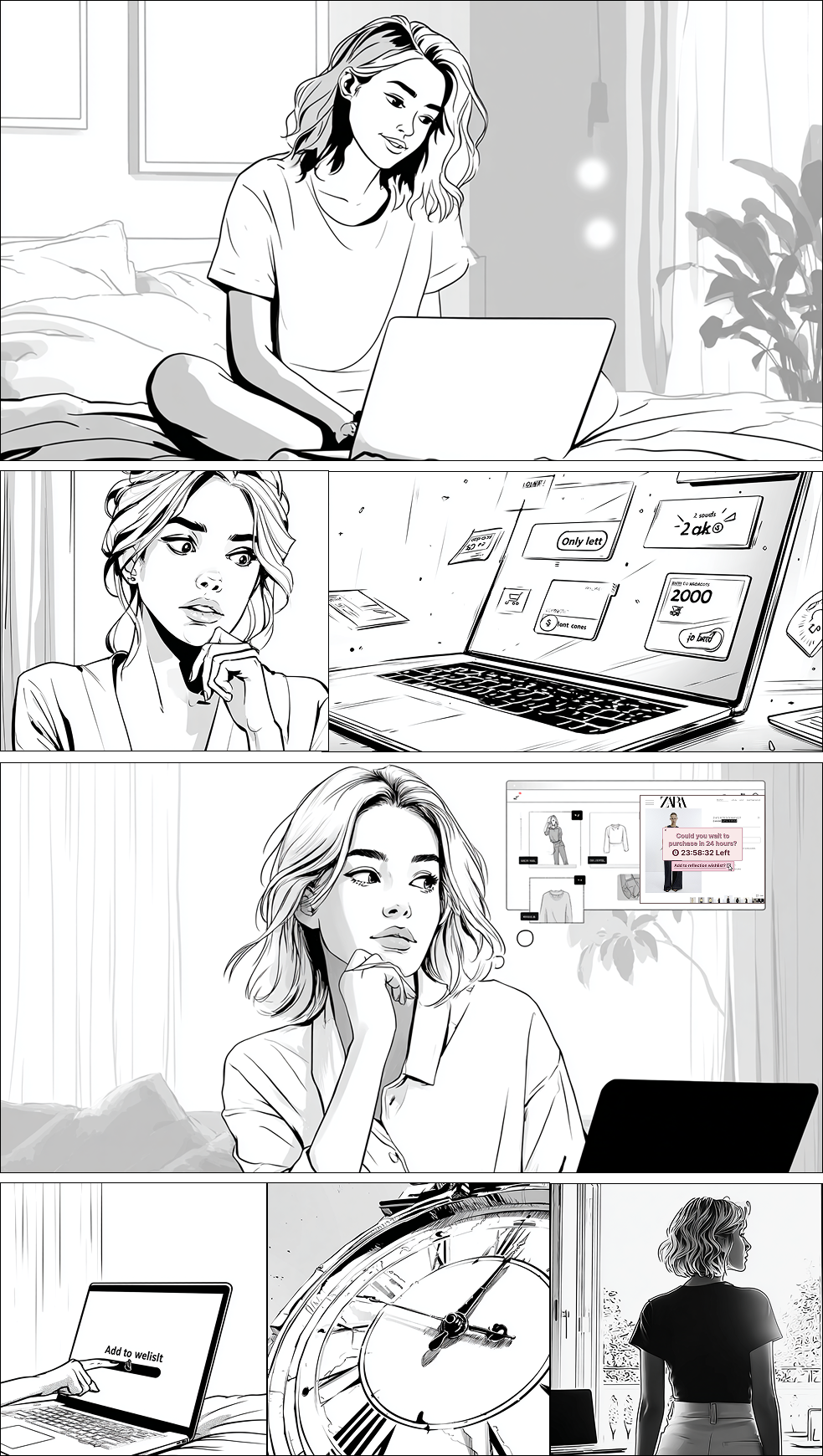
Context
Persona: Alina, 27, junior marketing executive — shops out of stress.
TAKEAWAY
Trust and autonomy coexisting — "a pause that feels like self-care."
System Impact:
- Gets reflection sidebar prompt while frantically online shopping.
- Pauses to compare with her wardrobe, adds item to wishlist.
- Feels a sense of control and emotional awareness.
- Item added to list has less importance, no purchase made.
Unexpected Pivot: Tech as Mindfulness Habit
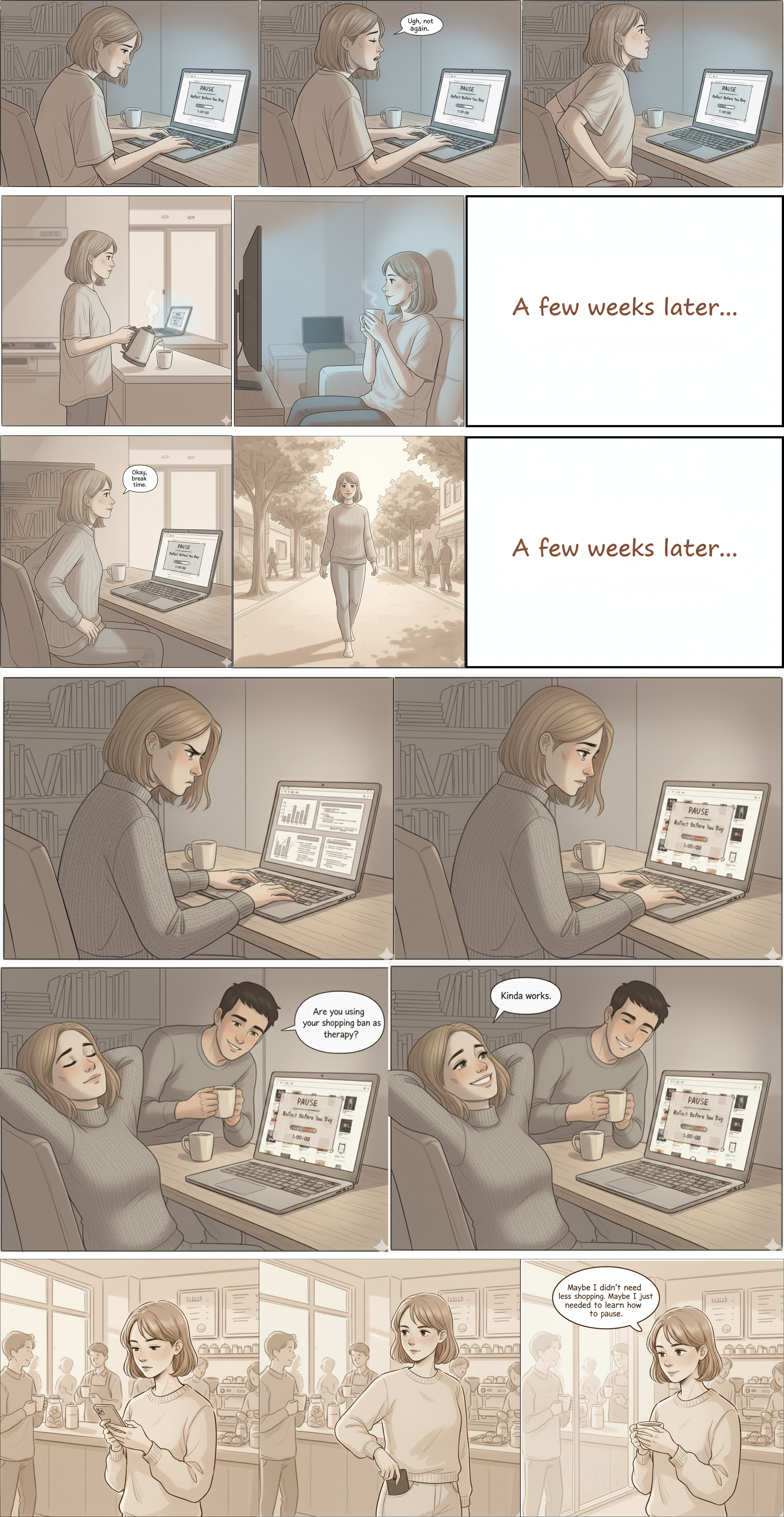
Context
Persona: Mira, 34, graphic designer recovering from burnout
Takeaway
A tool meant to block impulsive shopping becomes a mindfulness practice. The technology unexpectedly supports digital well-being.
Key moments: Over time, she realizes it forces her to rest. Over time, the "block" becomes her daily mental settle routine.
Unintended Accident: Reflection as Performance
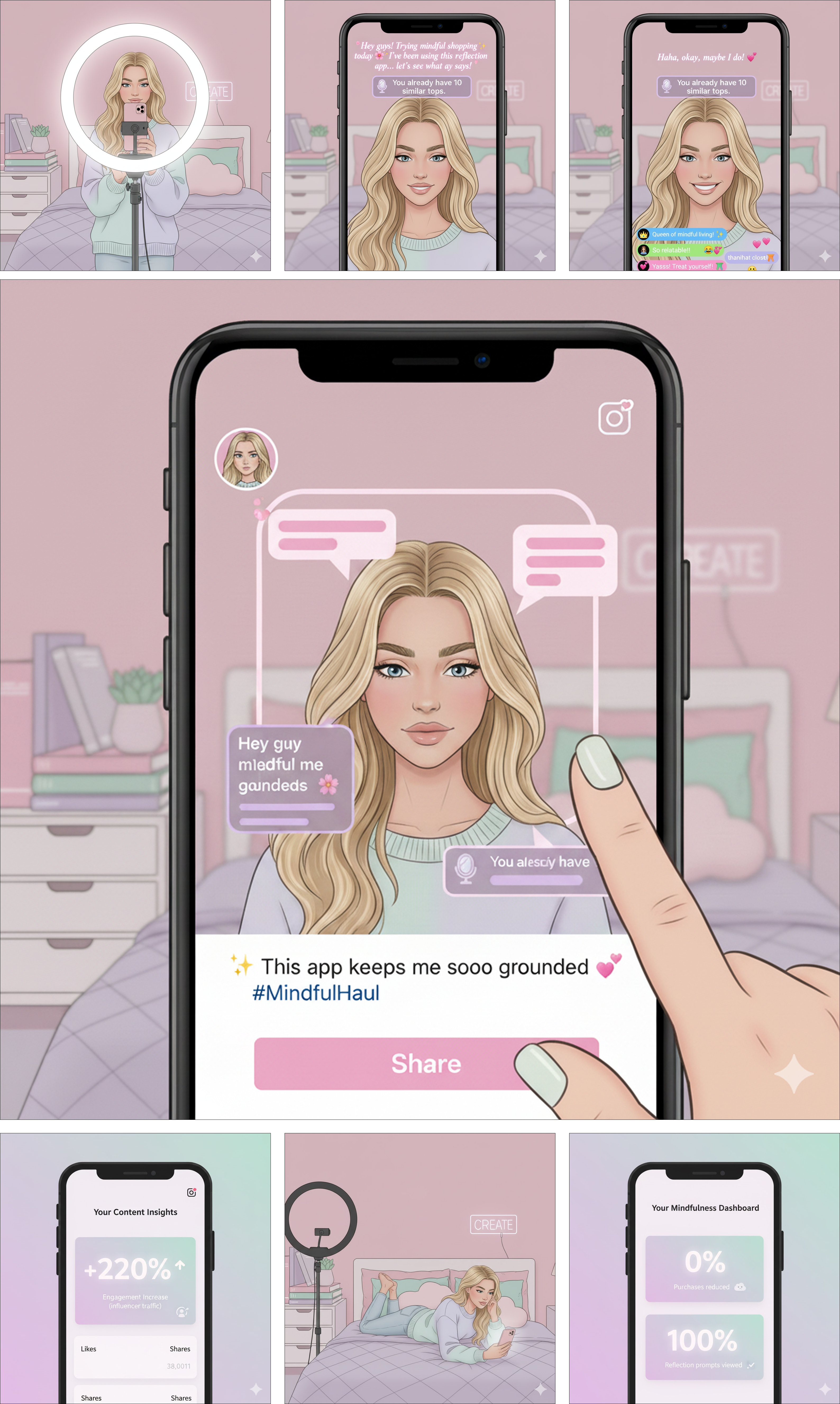
Context
Persona: Tara, 22, lifestyle influencer, content creator, shopping is part of her job
Takeaway
The "light" intervention becomes absorbed by the attention economy. Tara knows she's not mindful, but in a world built on content, awareness alone isn't enough to change behavior.
Slow realization: The failure isn't that the system fails — it's that it's performative. The tool becomes part of her aesthetic persona online rather than a genuine intervention.
Key Insights from Scenarios
From Scenario 1 (Medium): Balance is Key
When reflection works as intended, it creates trust and autonomy. The system achieves its goal by respecting user agency while gently encouraging mindful choices.
From Scenario 2 (Extreme): Friction Can Teach
What started as a shopping blocker became a mindfulness ritual. The extreme mode's forced pause taught her body a new rhythm — the "block" became her daily mental settle routine. This shows that friction, when repeated, can transform into positive habit formation.
From Scenario 3 (Light): Aesthetic Absorption is a Real Risk
Tara's story reveals the dark side of weak interventions in the attention economy. When reflection becomes too easy to dismiss, it transforms from meaningful pause into performative aesthetic. The light mode was absorbed into her content creation. Awareness alone isn't enough; the system must create genuine behavioral change, not just the appearance of mindfulness.